Sunday, 16 March 2014

Final Piece


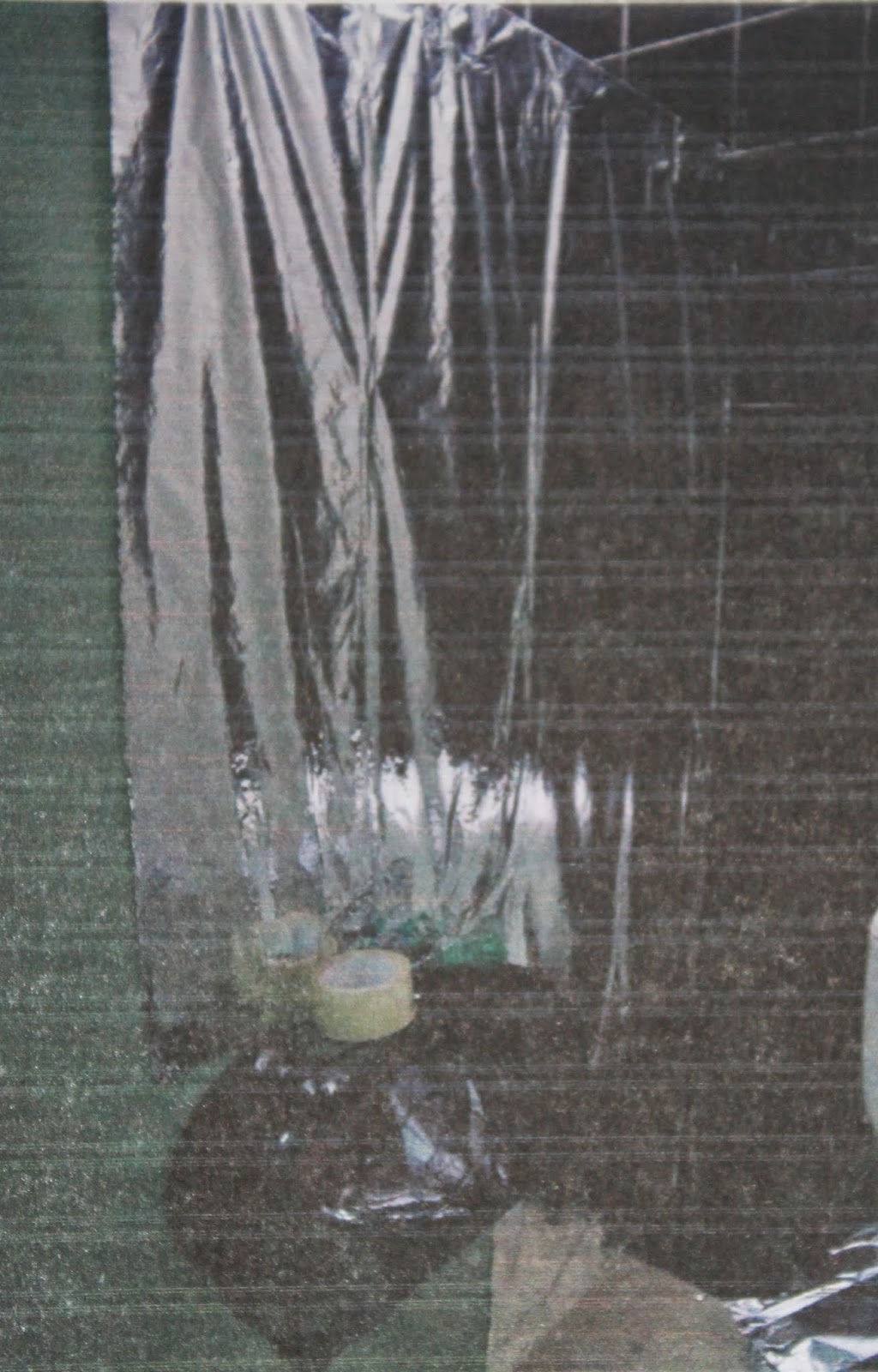
The setting for the project was a single cubicle in the ladies toilets. I chose this area because it is a very confided space, perfect for my idea to change an entire interior atmosphere. There is a humorous component to this area as a toilet is usually known for its functional purposes, a place where people go to to excrete the waste in privacy. So to highlight this, it can be very shocking and comedic. 

Process:
              Before


During 


After


Art Work Appreciation Statuses
This literally made may day! It so good to see people still appreciate art and more excitingly mine this time!


Saturday, 15 March 2014

Yayoi Kusama

Biography
Yayoi Kusama was born in 1929 in Japan and started using dots as early as ten years old. She has been prolific for decades creating sculptures, installations, novels, and films. In 2008 one of her works sold at Christie’s for $5.1 Million, setting a record for a living female artist. According to her Wikipedia profile she influenced Yoko Ono, and she is still going strong sharing her bold, colorful, and brilliant creations.
http://www.creativityfuse.com/2011/03/bold-polka-dot-creations-of-yayoi-kusama/

Started to paint using polka dots and nets as motifs at around age ten ,and created fantastic paintings in watercolors, pastels and oils.
Went to the United States in 1957. Showed large paintings, soft sculptures, and environmental sculptures using mirrors and electric lights. In the latter 1960s, staged many happenings such as body painting festivals, fashion shows and anti-war demonstrations. Launched media-related activities such as film production and newspaper publication. In 1968, the film “Kusama's Self-Obliteration"which Kusama produced and starred in won a prize at the Fourth International Experimental Film Competition in Belgium and the Second Maryland Film Festival and the second prize at the Ann Arbor Film Festival. Held exhibitions and staged happenings also in various countries in Europe.
Returned to Japan in 1973. While continuing to produce and show art works, Kusama issued a number of novels and anthologies. In 1983, the novel “The Hustlers Grotto of Christopher Street" won the Tenth Literary Award for New Writers from the monthly magazine Yasei Jidai.
In 1986, held solo exhibitions at the Musee Municipal, Dole and the Musee des Beaux-Arts de Calais, France, in 1989, solo exhibitions at the Center for International Contemporary Arts, New York and the Museum of Modern Art, Oxford, England. In 1993, participated in the 45th Venice Biennale.
Began to create open-air sculptures in 1994. Produced open-air pieces for the Fukuoka Kenko Center, the Fukuoka Municipal Museum of Art, the Bunka-mura on Benesse Island of Naoshima, Kirishima Open-Air Museum and Matsumoto City Museum of Art, , in front of Matsudai Station, Niigata,TGV's Lille-Europe Station in France, Beverly Gardens Park, Beverly hills, Pyeonghwa Park,
Anyang and a mural for the hallway at subway station in Lisbon.
Began to show works mainly at galleries in New York in 1996. A solo show held in New York in the same year won the Best Gallery Show in 1995/96 and the Best Gallery Show in 1996/97 from the International Association of Art Critics in 1996.
From1998 to 1999, a major retrospective of Kusama's works which opened at the Los Angeles County Museum of Art traveled to the Museum of Modern Art, New York, the Walker Art Center and the Museum of Contemporary Art, Tokyo.
In 2000, Kusama won The Education Minister's Art Encouragement Prize and Foreign-Minister's Commendations. Her solo exhibition that started at Le Consortium in France in the same year traveled to Maison de la culture du Japon, Paris, KUNSTHALLEN BRANDTS ÆDEFABRIK, Denmark, Les Abattoirs, Toulouse, KUNSTHALLE Wien, Art Sonje Center, Seoul.
Received the Asahi Prize in 2001, the Medal with Dark Navy Blue Ribbon in 2002, the French Ordre des Arts et des Lettres (Officier), and the Nagano Governor Prize (for the contribution in encouragement of art and culture) in 2003
In 2004, Her solo exhibition “KUSAMATRIX" started at Mori Museum in Tokyo. This exhibition drew visitors totaling 520,000 people. In the same year, another solo exhibition started at The National Museum of Modern Art, Tokyo  In 2005, it traveled to The National Museum of Modern Art, Kyoto, Hiroshima City Museum of Contemporary Art, Contemporary Art Museum, Kumamoto,
Matsumoto City Museum of Art.
Received the 2006 National Lifetime Achievement Awards, the Order of the Rising Sun, Gold Rays with Losette and The Praemium Imperiale -Painting- in 2006.
In 2008, Documentary film : “Yayoi Kusama, I adore myself" released in Japan and also screened at international film festival and museum. Exhibition tour started at Museum Boijmans Van Beuningen in Rotterdam, traveled to Museum of Contemporary Art Sydney in Australia in 2009, City Gallery Wellington in New Zealand. Conferred the honorary citizen of Matsumoto city.
Solo exhibition at Gagosian Gallery NY and LA, Victora Miro Gallery in London and Padiglione d'Arte Contemporanea in Milan. Honored as Person of Cultural Merits in Japan 2009.
In 2010, solo exhibition and permanent outdoor sculpture at Towada Art Center in Japan.?Participation to Sydney Biennale and Aichi Triennale. Solo exhibition at Victoria Miro Gallery in London, fiac in Paris.
http://www.yayoi-kusama.jp/e/biography/index.html


Parc Villette Paris by Yayoi Kusama via austinevan on flickr

Dots Obsession New Century 2000 by Yayoi Kusama

Infinity Mirror Room - Phallis Field (Floor Show) 1965-98 by Yayoi Kusama
Infinity Mirror Room – Phallis Field (Floor Show) 1965-98 by Yayoi Kusama

Mirror Room (Pumpkin) 1991 by Yayoi Kusama

The Gleaming Lights of Souls by Yayoi Kusama

Heres an exceptional article outlining her unique art work and life: http://citygallery.org.nz/assets/New-Site/Education/Education-Resources/Kusama%20Ed%20Kit%20Primary%20WEB%20ME.pdf

Friday, 14 March 2014

Olafur Eliasson

Olafur Eliasson 

Biography

Olafur Eliasson was born in 1967 in Copenhagen, Denmark of Icelandic parentage. He attended the Royal Academy of Arts in Copenhagen from 1989 to 1995. He has participated in numerous exhibitions worldwide and his work is represented in public and private collections including the Solomon R Guggenheim Museum, New York, The Museum of Contemporary Art, Los Angeles, the Deste Foundation, Athens and Tate. Recently he has had major solo exhibitions at Kunsthaus Bregenz, Musée d’Art Moderne de la Ville de Paris andZKM (Center for Art and Media), Karlsruhe and represented Denmark in the 2003 Venice Biennale. He currently lives and works in Berlin.
His Works 
The basic elements of the weather – water, light, temperature, pressure – are the materials that Olafur Eliasson has used throughout his career. His installations regularly feature elements appropriated from nature – billowing steam replicating a water geyser, glistening rainbows or fog-filled rooms. By introducing ‘natural’ phenomena, such as water, mist or light, into an un specifically cultivated setting, be it a city street or an art gallery, the artist encourages the viewer to reflect upon their understanding and perception of the physical world that surrounds them. This moment of perception, when the viewer pauses to consider what they are experiencing, has been described by Eliasson as ‘seeing yourself sensing’.

Many of Eliasson’s works explore the relationship between the spectator and object. In Your Sun Machine 1997 viewers entered a room which was empty apart from a large circular hole punctured in the roof. Each morning, sunlight streamed into the space through this aperture, at first creating an elliptical, then a circular outline on the walls and floor. The beam of light shifted across the room as the day progressed. The movement of the ‘sun’ across the room was apparently the central focus of the work, but in observing this, the viewer was reminded of his or her own position as an object, located on earth, spinning through space around the real sun.

For The Mediated Motion at the Kunsthaus Bregenz in Austria (2001), Eliasson created a sequence of spaces filled with natural materials including water, fog, earth, wood, fungus and duckweed. During their journey through the exhibition, visitors were confronted by a variety of sensory experiences – sights, smells, and textures – which had been precisely articulated by the artist. Eliasson also modified the dominant orthogonal character of the building, including the insertion of a subtly slanting floor, which made visitors become more conscious of the act of movement through space.

http://www.tate.org.uk/whats-on/exhibition/unilever-series-olafur-eliasson-weather-project/artist
Olafur Eliasson Your Sun Machine 1997
Olafur Eliasson
Your Sun Machine
 1997
Installation view Marc Foxx Gallery, Los Angeles
© Olafur Eliasson

Olafur Eliasson The mediated motion 2001
Olafur Eliasson
The mediated motion 2001
Installation view Kunsthaus Bregenz
Courtesy neugerriemschneider

Olafur Eliasson
The Weather Project 2003
© Olafur Eliasson 
© Tate 2003
The subject of the weather has long shaped the content of everyday conversation. The eighteenth-century writer Samuel Johnson famously remarked ‘It is commonly observed, that when two Englishmen meet, their first talk is of the weather; they are in haste to tell each other, what each must already know, that it is hot or cold, bright or cloudy, windy or calm.
In The Weather Project, the fourth in the annual Unilever Series of commissions for the Turbine Hall, Olafur Eliasson takes this ubiquitous subject as the basis for exploring ideas about experience, mediation and representation.
Researching Eliasson and his fasination in recreating a natural environment in a totally different setting has really inspired me. I would love to incorporate a similar idea in my installation. 

Tuesday, 11 March 2014

Inspirational Video

This is a great idea, with the one material totally transforming something that has an existing  function into something totally useless. It just shows how powerful the material can be if used in a large quantity. Something I am highly considering as an idea for the allumination assignment.

Monday, 10 March 2014

Dominic Wilcox

Artist Research
Born. Sunderland, UK
Education. Royal College of Art (MA), Edinburgh College of Art (BA)
Based. London, UK
Dominic Wilcox is a British artist and designer who creates innovative objects, drawings and installations. In 2002 he graduated from Ron Arad’s renowned Design Products course at the Royal College of Art and has gone on to develop an international reputation for his diverse range of original and creative work.
Through his drawings and objects he aims to place a spotlight on the banal; adding a new, surprising perspective on the everyday. Recent projects include the design of a pair of shoeswith inbuilt GPS to guide the wearer home, a race against a 3D Printer at the V&A and a 10″ vinyl record called Sounds of Making in East London.
Designer Thomas Heatherwick had this to say on Wilcox’s invention drawings, “Dominic Wilcox’s drawings aren’t just witty and beautifully drawn, they are serious challenges to the real world to keep looking at itself with innocent eyes, wondering what else is possible.”
In 2009 he started a Webby award nominated blog called Variations on Normal where he shows his sketchbook inventions and observations. He has received commissions from a diverse range of individuals and organisations such as super model Helena Christensen, Nike, Jaffa Cakes, Paul Smith, Selfridges, The V&A museum and the Design Museum.
I’ve convinced myself that within everything that surrounds us, there are hundreds of ideas and connections waiting to be found. We just need to look hard enough. Some of my ideas develop from observations on human behaviour and I express them through the objects I create. I also experiment with materials to try to find surprises that can’t be found simply by thinking with a pen or computer.” Dominic Wilcox
http://dominicwilcox.com/about/
I REMEMBER YOU WELL
From the collection 'Variations on Normal'
Time is so fleeting, many people want it all back again but the best we can do is try to capture moments. A bronze bust captures a person’s face for eternity. I decided to use another metal to create my own bust, one that is so fragile it can be destroyed in a second. This tin foil bust is me at the age of 21 (a long while ago). (Made by forming foil into the original old plaster mould)

Tin Foil Bust
Tin Foil Bust
Tin Foil Bust
Tin Foil Bust
Tin Foil Bust

Tuesday, 4 March 2014

Lecture 1


What is installation art?
'Installation art describes an artistic genre of three-dimensional works that are often site-specific and designed to transform the perception of a space. Generally, the term is applied to interior spaces, whereas exterior interventions are often called Land art; however, the boundaries between these terms overlap.' according to Wikipedia.

History of installation art
By Heather Harvey
Installation art is a relatively new approach in contemporary art emerging out of the discipline-blurring, irreverent artistic experimentations of the 1960s and '70s. 

Rather than being a distinct art object, like a painting or a sculpture, installation typically encompasses an entire room or architectural space and is often, but not always, situated in a gallery or museum setting. The materials used, constraints of a given space and, most importantly, the intentions of the artist have resulted in incredibly varied types of installations. Some artists paint, draw, collage or sculpt directly on gallery walls. Others integrate video or other digital and new media into the work. Often the architectural space itself is altered either permanently or, more often, temporarily. Many installations also incorporate lighting, sound, even smell or temperature into the work. 

Installation art can be understood as a whole bodily experience, something you walk into and inhabit. It takes into account not just art objects, but the venue itself, and the spaces in between things. It is more puzzling and less familiar than traditional art forms, so has more potential to surprise or shift perspective in the way traveling to an unfamiliar place can be.

Although installation art may appear at first to be utterly distinct from traditional art forms, in fact it has direct antecedents with avant-garde art of the late nineteenth and twentieth centuries, and is also part of the larger art historical trajectory reaching right back to the Renaissance.

The Renaissance initiated a passionate artistic obsession to achieve ever more convincing depictions of visual reality. Most artistic innovations from the Renaissance through the nineteenth century are improvements or variations on this visual realism. 

Towards the end of the nineteenth century, though, something distinctly new begins to occur in visual art. Some artists start to question the Renaissance traditions. They are no longer convinced that the best art is necessarily the most realistic. These avant-garde artists look for new approaches and new potentials. They feel that the virtuosic realism of the Renaissance tradition has grown stale and overly academic. It has lost its power to inspire, awe, or surprise. The avant-garde artists hope to reclaim this power by exploring states of mind, emotions, psychological or spiritual experience, political aspirations, and philosophical insights in their art. They begin to intuit that abstraction and other expressive approaches are capable of conveying these sorts of poignant, important, and ephemeral truths.

The avant-garde experimenters are also natural outsiders and social rebels. They are contrarians who want to find not only new ways to make art, but also new ways to live and think. They are idealists, dreamers, and visionaries who believe better things than the status quo are possible, and that new ways of living and making art can transform and improve society.

Today's installation art should really be understood within this same art historical narrative. By the time artists start to venture into installation in the mid-twentieth century, there is a growing sense that all traditional art forms, including those from the avant-garde period, have been played out. Many artists who work with installations talk about wanting to make something unfamiliar, unsettling, and surprising. They also hope to confound and blur distinctions between art and life. In other words, like their avant-garde forebearers, they want to shake art up, renew it and make it powerful and unexpected again

As different as these art periods may seem at first, artists from the Renaissance right up to the present all want to make deeply-affecting work that can move people, make them think, and delight them with aesthetic beauty or profound ideas. Installation approaches allow artists to reckon with all the same aesthetic and philosophical concerns that art has always engaged with, but to do so in new ways ways that free artists up from routine expectations. 

Installation also releases artists from the typical constraints of the art market because most installation art is difficult to sell or collect. So artists worry less about the dollar value of their art and concentrate on the meaning and experiences they are creating. This allows them to return once again to the roots of art — to inspire, transform, rethink, and contemplate the human condition.

http://artsmagazine.info/articles.php?view=detail&id=201007251946141353

Monday, 3 March 2014

project 1: 'Alumination'


The first assignment of this course is to develop an installation with limited materials, space and time. Most of all getting us to think about the interactions between space, material and viewer. Further challenging us, we must ONLY use aluminium foil with an exception to adjoining devices such as tape, string and glue. Primarily using this versatile material as the drawing tool. Documentations of the developmental process must be included as well at least three different ideas in preparation to the final outcome.