Wednesday, 30 April 2014

Settings Assignment

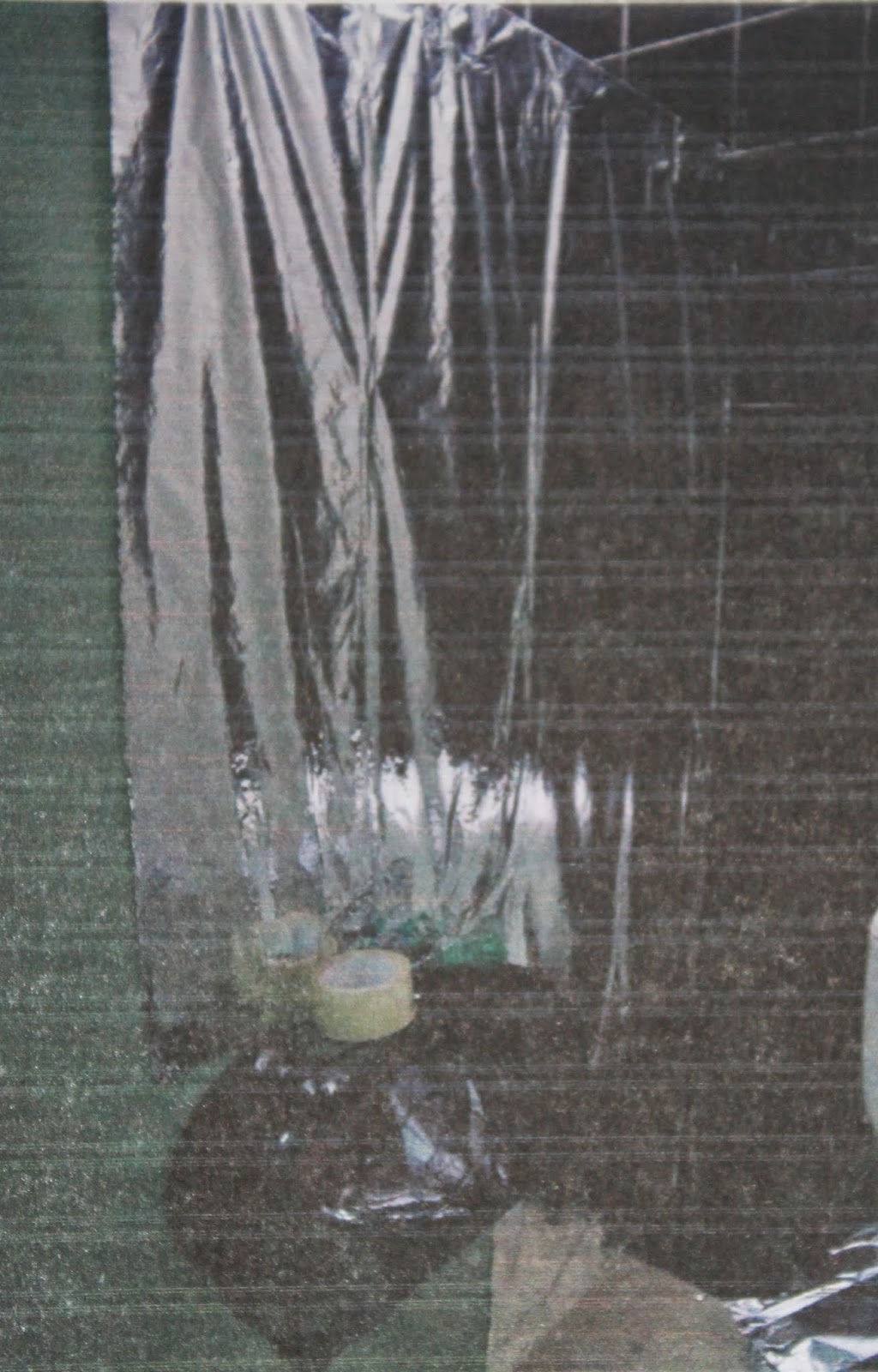
The starting point for this project was consecutively the material, and the location. The cling wrap came as a result of group discussion and brainstorming possible ideas; this was the only material we all found pleasing, and agreed upon. The location was singled out by assessing the locations and choosing one based on our ideas of an appealing location; the high point, open space, and seclusion was what initially attracted us. It was through the process of experimentation and the construction of the artwork that ideas were formed. Prompting from the outcomes and the fragility and flexibility of the material produced concepts that would apply to the nature of the artwork and the impression it evokes.
From multiple experiments with stretching the cling wrap across a space, and the way it reacted with the surroundings, we settled on using it in a simplistic way to draw attention to the way it responds to the natural elements, particularly the wind. During construction we found that it was too simplistic and didn’t do much to adjust the space. We tried including a bench that was originally part of the space, but it was aesthetically displeasing as it made it look too busy.  We sought to come up with something to include that would remedy this problem. Being inspired by the works of several artists who interacted directly with people, in particular Marina Abramovic, we settled on the idea of performance, or interactive art.
The cling wrap of the finished piece forms an enclosed barrier, within which a person could be situated. The person inside the enclosed space represents the collective ‘individual’, and the cling wrap is the barrier of their perceptions of themselves, within which we are all trapped. The idea is that our thoughts and perspectives, even those of our subconscious, form and shape our physical reality, and our behaviour. Inside our brain, our thoughts are not physical, but they are still physicalised through both conscious and subconscious carrying out of thought.
An example is the effect current technology has on us. Social media is all about self promotion; the mass input of posts that are all about the individual, and what they are doing leads to a very self absorbed way of thinking that our generation has adapted. This mental state in turn influences us externally; it impacts and controls our lives to the point where we our turned inwards mentally, forming a barrier; a limited perception. The physical version of this barrier present in the artwork is transparent like its real counterpart, yet still has the ability to have a profound effect on the individual.

The outcome was as we envisioned, however we encountered some weather related issues; the cling wrap was broken apart by the weight of overnight rain. There were some interesting aesthetic qualities that resulted, though. While a lot of the barrier had fallen down, some still remained suspended in the space, capturing the rain. The collection of raindrops on the plastic was also quite lovely. In this state, rather than capturing the wind, as it did when it was dry, it captured water instead. This unexpected outcome ruled out the possibility of an interactive performance, but provided opportunities for problem solving, and produced an outcome that was more aesthetic than conceptual.


Friday, 11 April 2014

Marina Abramovic

Artist Research
MARINA ABRAMOVIC, BORN IN 1946 IN BELGRADE, YUGOSLAVIA, IS WITHOUT QUESTION ONE OF THE SEMINAL ARTISTS OF OUR TIME. SINCE THE BEGINNING OF HER CAREER IN YUGOSLAVIA DURING THE EARLY 1970S WHERE SHE ATTENDED THE ACADEMY OF FINE ARTS IN BELGRADE, ABRAMOVIC HAS PIONEERED THE USE OF PERFORMANCE AS A VISUAL ART FORM. THE BODY HAS ALWAYS BEEN BOTH HER SUBJECT AND MEDIUM. EXPLORING THE PHYSICAL AND MENTAL LIMITS OF HER BEING, SHE HAS WITHSTOOD PAIN, EXHAUSTION, AND DANGER IN THE QUEST FOR EMOTIONAL AND SPIRITUAL TRANSFORMATION. ABRAMOVIC'S CONCERN IS WITH CREATING WORKS THAT RITUALIZE THE SIMPLE ACTIONS OF EVERYDAY LIFE LIKE LYING, SITTING, DREAMING, AND THINKING; IN EFFECT THE MANIFESTATION OF A UNIQUE MENTAL STATE. AS A VITAL MEMBER OF THE GENERATION OF PIONEERING PERFORMANCE ARTISTS THAT INCLUDES BRUCE NAUMAN, VITO ACCONCI, AND CHRIS BURDEN, ABRAMOVIC CREATED SOME OF THE MOST HISTORIC EARLY PERFORMANCE PIECES AND IS THE ONLY ONE STILL MAKING IMPORTANT DURATIONAL WORKS. 

FROM 1975 UNTIL 1988, ABRAMOVIC AND THE GERMAN ARTIST ULAY PERFORMED TOGETHER, DEALING WITH RELATIONS OF DUALITY. AFTER SEPARATING IN 1988, ABRAMOVIC RETURNED TO SOLO PERFORMANCES IN 1989. ABRAMOVIC HAS PRESENTED HER WORK WITH PERFORMANCES, SOUND, PHOTOGRAPHY, VIDEO, SCULPTURE, AND ‘TRANSITORY OBJECTS FOR HUMAN AND NON HUMAN USE’ IN SOLO EXHIBITIONS AT MAJOR INSTITUTIONS IN THE U.S. AND EUROPE, INCLUDING THE STEDELIJK VAN ABBEMUSEUM, EINDHOVEN, THE NETHERLANDS (1985), MUSÉE NATIONAL D’ART MODERNE, CENTRE GEORGE POMPIDOU, PARIS (1990), NEUE NATIONAL GALERIE, BERLIN (1993), AND THE MUSEUM OF MODERN ART, OXFORD (1995). HER WORK HAS ALSO BEEN INCLUDED IN MANY LARGE-SCALE INTERNATIONAL EXHIBITIONS INCLUDING THE VENICE BIENNALE (1976 AND 1997) AND DOCUMENTA VI, VII AND IX, KASSEL, GERMANY (1977, 1982 AND 1992). IN 1995, ABRAMOVIC’S EXHIBITION OBJECTS PERFORMANCE VIDEO SOUND TRAVELED TO THE MUSEUM OF MODERN ART, OXFORD, THE IRISH MUSEUM OF MODERN ART, DUBLIN, AND THE FRUITMARKET GALLERY, EDINBURGH. IN 1998, THE EXHIBITION ARTIST BODY - PUBLIC BODY TOURED EXTENSIVELY INCLUDING STOPS AT KUNSTMUSEUM AND GROSSE HALLE, BERN AND LA GALLERA, VALENCIA. IN 2000, A LARGE SOLO SHOW WAS HELD AT THE KUNSTVEREIN IN HANNOVER. IN 2002, SHE PARTICIPATED IN THE BERLIN-MOSCOW EXHIBITION, WHICH OPENED AT THE MARTIN GROPIUS-BAUHAUS IN BERLIN AND FINISHED ITS TOUR IN 2004 AT THE STATE HISTORICAL MUSEUM, MOSCOW. IN 2004, ABRAMOVIC ALSO EXHIBITED AT THE WHITNEY BIENNIAL IN NEW YORK AND HAD HAD A SIGNIFICANT SOLO SHOW, THE STAR, AT THE MARUGAME MUSEUM OF CONTEMPORARY ART AND THE KUMAMOTO MUSEUM OF CONTEMPORARY ART, JAPAN.
MARINA ABRAMOVIC HAS TAUGHT AND LECTURED EXTENSIVELY IN EUROPE AND AMERICA INCLUDING THE HOCHSCHULE FUR BILDENDE KUNST IN HAMBURG, AND THE ECOLE DES BEAUX ARTS IN PARIS. IN 1994 SHE BECAME PROFESSOR FOR PERFORMANCE ART AT THE HOCHSCHULE FUR BILDENDE KUNST IN BRAUNSCHWEIG WHERE SHE TAUGHT FOR SEVEN YEARS. IN 2004 SHE WAS AWARDED AN HONORARY DOCTORATE FROM THE ART INSTITUTE IN CHICAGO.
SHE WAS AWARDED THE GOLDEN LION FOR BEST ARTIST AT THE 1997 VENICE BIENNALE FOR HER EXTRAORDINARY VIDEO INSTALLATION/PERFORMANCE PIECE BALKAN BAROQUE‚ AND IN 2003 RECEIVED THE BESSIE FOR THE HOUSE WITH THE OCEAN VIEW‚ A 12-DAY PERFORMANCE AT SEAN KELLY GALLERY, NEW YORK. 

IN 2005, ABRAMOVIC PRESENTED BALKAN EROTIC EPIC AT THE PIRELLI FOUNDATION IN MILAN, ITALY AND AT SEAN KELLY GALLERY, NEW YORK. THAT SAME YEAR, SHE HELD A SERIES OF PERFORMANCES CALLED SEVEN EASY PIECES AT THE GUGGENHEIM MUSEUM IN NEW YORK, WHICH WERE AWARDED THE PRIZE FOR 2005-2006 BEST EXHIBITION OF TIME- BASED ART BY THE UNITED STATES ART CRITICS ASSOCIATION.
IN 2008 SHE WAS DECORATED WITH THE AUSTRIAN COMMANDER CROSS FOR HER CONTRIBUTIONS TO ART HISTORY. IN SEPTEMBER 2009 SHE WAS DECORATED WITH THE HONORARY DOCTORATE OF ARTS BY THE UNIVERSITY OF PLYMOUTH, UK. IN THE SPRING OF 2010, SHE HAD HER FIRST MAJOR RETROSPECTIVE IN THE UNITED STATES AT THE MUSEUM OF MODERN ART- NEW YORK, AND SIMULTANEOUSLY PERFORMED FOR MORE THAN 700 HOURS IN HER DURATIONAL PIECE THE ARTIST IS PRESENT.
IN SUMMER OF 2011, ABRAMOVIC WAS BESTOWED WITH THE HONORARY DEGREE OF DOCTOR OF FINE ARTS BY THE WILLIAMS COLLEGE IN WILLIAMSTOWN, MASSACHUSETTS. IN 2011 A THEATRE PIECE BY ROBERT WILSON ENTITLED THE LIFE AND DEATH OF MARINA ABRAMOVIC PREMIERED AND ABRAMOVIC'S RETROSPECTIVE THE ARTIST IS PRESENT TOURED WITH GREAT SUCCESS TO THE GARAGE, MOSCOW.
AT SUNDANCE FILM FESTIVAL IN UTAH AND THE CANADIAN FILM PREMIERE, REEL ARTISTS FILM FESTIVAL, TORONTO. ABRAMOVIC HAS MAJOR SHOWS SCHEDULED IN MARCH AT PAC AND LIA RUMMA GALERIA, MILAN. THE ARTIST WILL ALSO PERFORM IN ROBERT WILSON'S THEATRE PIECE AS IT MOVES LOCATION DURING APRIL AND JUNE IN MADRID, BASEL, AMSTERDAM AND ANTWERP. OTHER MAJOR EXHIBITIONS DURING 2012 INCLUDE FEAST: RADICAL HOSPITALITY IN CONTEMPORARY ART, AT THE UNIVERSITY OF CHICAGO, IMMATERIAL ART, AT THE MUSEUM OF MODERN AND CONTEMPORARY ART, RIJEKA, BALKAN STORIES AT KUNSTHALLE VIENNA, AND SOLO SHOWS AT LA FABRICA GALLERY, MADRI AND GALLERI BRANDSTRUP, OSLO. 
http://marinafilm.com/about-marina-abramovic

Friday, 28 March 2014

Sitings Assignment

After much research and editing, I was finally done.

Ah Xian’s ‘Evolutionaura’

Upon entering the Art Gallery of South Australia one is immediately drawn to Ah Xian’s Evolutionaura. The use of organic material and the human form instantly appeals to those who have an interest in the human figure.

I found this exhibition to be easily open to interpretation due to its simplistic design. There was no descriptive text to give the sculpture a voice, allowing the viewer’s imagination to make their own interpretation. After researching the artist’s background I discovered that Xian is a Chinese-Australian citizen who sought asylum in Australia in the early 1990s, he currently travels back and forth between both countries. His work reflects the inter-relationship between these two cultures. This is seen in his work as all the figures inhabit an “in- between space – between countries and cultures” (2. Jose, 2014).  For the past thirty years, Xian has been progressively studying the human figure. Relating majority of his works to themes such as ‘migration, cultural displacement, emotional and physical trauma, and humanity’s relationship to its environment, be it natural, social, or spiritual’ (Storer, 2014). At first glance I thought it represented the pain caused by some type of physical disease due to the protruding objects on the figures’ face and body. Then I noticed the figures’ distinct eastern facial features which I immediately associated with eastern culture. This prompted me to think about the tragedies that occurred in Asia, such as the Japanese tsunami, the Fukushima nuclear disaster, the genocide in Cambodia, increasing poverty, and the pain suffered by all the communities that were and still are involved in these tragedies.
Evolutionaura was built for one reason and that was conveying the artist’s personal story to the world.  It is an art work on a large scale, with a collection of eight human sized figures in total. This collection is not only large in size, but also full of extravagance as only the most precious metals and stones were used such as limestone, agate, turquoise and others valued for their unusual shapes, colours and surfaces. Bronze was used to ‘reference the traditional Chinese culture’ (2.Jose, 2014), it also represented the successful ‘mining boom that brought his two countries of residence into close association’ (2.Jose, 2014).
Spatially the figures are laid out in a very structured position around a dark room with the only light source coming from dim lights that were positioned above each figure. With each work approximately three feet apart, this gave viewers the opportunity to walk around each figure and obtain a thorough look. The human figures were placed at eye level which allowed viewers to connect with them more intimately giving the viewer the ability to see the details of each art work. As mentioned the sculptural arrangements relate directly to the artists intention to portray the two vastly different inter-mixed cultures of China and Australia that he currently lives in.

Evolutionaura is known as a sculpture, as Xian places major importance on the main subject and placing no value on the space around the subject. Unlike an installation which places equal importance on the main subject and the surrounding space and environment that it inhabits.

Xian’s work evokes many emotions as I too have similarly been raised in two different cultures and can relate to what he is trying to portray. My parents would constantly take my siblings and I back to their homeland of Macedonia.  Both cultures were vastly different, yet I was able to discover the benefits of each lifestyle and discover my identity. I agree with Nicholas Jose the curator of this exhibition as he too admires the cultural uniqueness of the exhibition, ‘Ah Xian’s brings a new strength and directness into contemporary art in Australia’. (1. Jose, 2014)
My first impression of his work made me feel very disturbed and perplexed especially upon seeing figure 1 (Ah Xian, Evolutionaura5). I initially could not stop looking at it because it made me feel curious. It intrigued me and after researching it further my understanding grew into appreciation.

If I was the artist the only thing I would change would be the amount of figures that I had created. I would decrease the amount to around four or five because as a viewer it was difficult to process all eight figures as a whole.  Not only would that still aesthetically look appealing, the message would still be conveyed and the intricacies of each sculpture would have been more appreciated without being overwhelming. 

Tuesday, 25 March 2014

Sitings Research

This reflective writing assignment made us have to pick one sculpture or installation from an exhibition that was on at the current time. I chose a work from the 'Dark Heart' exhibition that was currently happening at the South Australian Art Gallery.

Ah Xian


In Evolutionaura Chinese-Australian artist Ah Xian continues his exploration of the human figure. Like the artist himself, the figures occupy an in-between space – between countries and cultures. Xian sought political asylum in  Australia in the post-Tiananmen period of the early 1990s, which provides, in Evolutionaura as elsewhere, an enduring conceptual basis informing his practice.
Comprised of eight life-size bronze busts, Ah Xian’s series references the traditional Chinese appreciation of the alchemic qualities of minerals, affixed to the casts in mimicry of a magnetic effect. The use of Lingbi stone hailing from Lingbi County in Anhui Province places the works within the traditions of Chinese philosophy and art, and is commonly referred to as ‘scholar’s stone’. Through the presentation of these minerals, Ah Xian artfully balances reverence with a critique of environmental exploitation.
In Evolutionaura Ah Xian takes his practice with human forms into an expanded environment, where growths and additions place the body in a fascinating, enveloping abstract landscape of stone.Nicholas Josehttp://adelaidebiennial.com.au/artists/ah-xian/Evolutionaura5-Agate-1^Ah Xian, Evolutionaura5: Agate-2, 2011–13, bronze, gold, agate beads, 49.5 x 43.5 x 26.0 cm © Ah Xian. Collection and courtesy the artistdown:Ah Xian, Evolutionaura2: Xuanyuan Stone-1, 2011–13, bronze, gold, Xuanyuan stone, 59.5 x 47.5 x 27.0 cm, © Ah Xian. Collection and courtesy the artist
Evolutionaura2-Xuan-Yuan-Stone-1

Evolutionaura1-Turquoise-1-Ah Xian, Evolutionaura1: Turquoise-1, 2011–13, bronze, gold, turquoise, 54.0 x 43.0 x 29.5 cm, © Ah Xian. Collection and courtesy the artist

Friday, 21 March 2014

Gregor Schneider

Lecture 3: Space and Site
It was during this lecture that I first heard of Gregor Schneider. He is a very interesting character and his art concepts are equally as intriguing.


Gregor Schneider

Short Bio

Gregor Schneider (1969, Rheydt-Germany)
Lives and works in Mönchengladbach, Rheydt, Germany.
Gregor Schneider is one of the most famous artists of his generation. He studied at the Kunstakademie in Düsseldorf and Münster, the University of Fine Arts in Hamburg and he has worked as guest professor in several universities around the world.
His works reflect his deep fears and traumas, however, in dealing with these issues he hopes to help us to reflect upon and overcome our nightmares. He became world famous when we won the Golden Lion at the Venice Biennale in 2001 with an installation of his childhood home, Totes Haus U R. The place was transformed into a maze with fake partitions, lead-lined rooms and a kitchen encrusted with mould.
Last year Schneider became embroiled in controversy after saying he wanted to create a space in a museum in which people could die. His argument was that society’s horror of death was so acute that we prefer to ignore it, leaving people to die in the clinical impersonality of a hospital rather than somewhere beautiful.
Gregor Schneider, 400 Meter Black Dead End, 2006 - 8 Photographs - 43x53cm
Gregor Schneider – 400 Meter Black Dead End, 2006 – 8 Photographs – 43x53cm
From 1985 Gregor Schneider (D, 1969) is continuously working on Haus ur in Rheydt. Since this time, the house is constantly rebuilt, hallways are made​​, double walls are constructed and windows are added, creating a labyrinth of sinister spaces. Haus ur is Schneider’s most famous work and was completely reconstructed in 2001 at the Venice Biennale, exhibited at the German Pavilion. Entitled ‘Der Deutsche Beitrag’ Schneider delivered with this mental labyrinth a sharp ironic commentary.
The series of 8 photo’s 400 Meter Black Dead End has been made ​​in Naples. The color photographs show eight positions at night from the street entering in a dark basement eventually resulting in a full black surface.
The first images starts at just a few meters distance from the house. The title indicates that hundreds of meters darkness will follow, after being surrounded by the complete darkness of the cellar. Again this work can be read as a sharp commentary on the famous black square made by Malevich:
the work was an important prelude to a century Modernism. This black square placed against the sun first appeared in 1913 in a design for the opera Victory over the Sun.
http://theridder.com/exhibitions/cassinicruiselll/gregor-schneider/
Basement cellar house, 1985-2012, 11 x 4 m
Extra Info:
Dark eerie spaces, dimly lit rooms and narrow passages leading to dead ends make up this immersive installation, which contrasts starkly with the bright gallery around it.
The artwork is a partial reconstruction of 'Totes Haus U R (Dead house)', a residential apartment block in Rheydt, Germany, which Schneider has transformed in an ongoing artistic project. Since 1985, he has been compulsively reconfiguring this building into labyrinth-like, uncanny architectural environments. In 1996, he began to recreate rooms from the house in exhibition spaces around the world, including this work which is based on the cellar. No longer a home, it has become a place of confinement, mystery and dislocation.
An image of Totes Haus u r Keller Venedig by Gregor Schneider
Dead house, 2001, gelatin silver photograph, 27.0 x 39.0 cm sight; 42.4 x 52.3 x 3.5 cm frame
An image of Schatten Fenster by Gregor Schneider
Shadow window, 1996, 192.0 x 109.0 x 6.0 cm

Sunday, 16 March 2014

Final Piece


The setting for the project was a single cubicle in the ladies toilets. I chose this area because it is a very confided space, perfect for my idea to change an entire interior atmosphere. There is a humorous component to this area as a toilet is usually known for its functional purposes, a place where people go to to excrete the waste in privacy. So to highlight this, it can be very shocking and comedic. 

Process:
              Before


During 


After


Art Work Appreciation Statuses
This literally made may day! It so good to see people still appreciate art and more excitingly mine this time!


Saturday, 15 March 2014

Yayoi Kusama

Biography
Yayoi Kusama was born in 1929 in Japan and started using dots as early as ten years old. She has been prolific for decades creating sculptures, installations, novels, and films. In 2008 one of her works sold at Christie’s for $5.1 Million, setting a record for a living female artist. According to her Wikipedia profile she influenced Yoko Ono, and she is still going strong sharing her bold, colorful, and brilliant creations.
http://www.creativityfuse.com/2011/03/bold-polka-dot-creations-of-yayoi-kusama/

Started to paint using polka dots and nets as motifs at around age ten ,and created fantastic paintings in watercolors, pastels and oils.
Went to the United States in 1957. Showed large paintings, soft sculptures, and environmental sculptures using mirrors and electric lights. In the latter 1960s, staged many happenings such as body painting festivals, fashion shows and anti-war demonstrations. Launched media-related activities such as film production and newspaper publication. In 1968, the film “Kusama's Self-Obliteration"which Kusama produced and starred in won a prize at the Fourth International Experimental Film Competition in Belgium and the Second Maryland Film Festival and the second prize at the Ann Arbor Film Festival. Held exhibitions and staged happenings also in various countries in Europe.
Returned to Japan in 1973. While continuing to produce and show art works, Kusama issued a number of novels and anthologies. In 1983, the novel “The Hustlers Grotto of Christopher Street" won the Tenth Literary Award for New Writers from the monthly magazine Yasei Jidai.
In 1986, held solo exhibitions at the Musee Municipal, Dole and the Musee des Beaux-Arts de Calais, France, in 1989, solo exhibitions at the Center for International Contemporary Arts, New York and the Museum of Modern Art, Oxford, England. In 1993, participated in the 45th Venice Biennale.
Began to create open-air sculptures in 1994. Produced open-air pieces for the Fukuoka Kenko Center, the Fukuoka Municipal Museum of Art, the Bunka-mura on Benesse Island of Naoshima, Kirishima Open-Air Museum and Matsumoto City Museum of Art, , in front of Matsudai Station, Niigata,TGV's Lille-Europe Station in France, Beverly Gardens Park, Beverly hills, Pyeonghwa Park,
Anyang and a mural for the hallway at subway station in Lisbon.
Began to show works mainly at galleries in New York in 1996. A solo show held in New York in the same year won the Best Gallery Show in 1995/96 and the Best Gallery Show in 1996/97 from the International Association of Art Critics in 1996.
From1998 to 1999, a major retrospective of Kusama's works which opened at the Los Angeles County Museum of Art traveled to the Museum of Modern Art, New York, the Walker Art Center and the Museum of Contemporary Art, Tokyo.
In 2000, Kusama won The Education Minister's Art Encouragement Prize and Foreign-Minister's Commendations. Her solo exhibition that started at Le Consortium in France in the same year traveled to Maison de la culture du Japon, Paris, KUNSTHALLEN BRANDTS ÆDEFABRIK, Denmark, Les Abattoirs, Toulouse, KUNSTHALLE Wien, Art Sonje Center, Seoul.
Received the Asahi Prize in 2001, the Medal with Dark Navy Blue Ribbon in 2002, the French Ordre des Arts et des Lettres (Officier), and the Nagano Governor Prize (for the contribution in encouragement of art and culture) in 2003
In 2004, Her solo exhibition “KUSAMATRIX" started at Mori Museum in Tokyo. This exhibition drew visitors totaling 520,000 people. In the same year, another solo exhibition started at The National Museum of Modern Art, Tokyo  In 2005, it traveled to The National Museum of Modern Art, Kyoto, Hiroshima City Museum of Contemporary Art, Contemporary Art Museum, Kumamoto,
Matsumoto City Museum of Art.
Received the 2006 National Lifetime Achievement Awards, the Order of the Rising Sun, Gold Rays with Losette and The Praemium Imperiale -Painting- in 2006.
In 2008, Documentary film : “Yayoi Kusama, I adore myself" released in Japan and also screened at international film festival and museum. Exhibition tour started at Museum Boijmans Van Beuningen in Rotterdam, traveled to Museum of Contemporary Art Sydney in Australia in 2009, City Gallery Wellington in New Zealand. Conferred the honorary citizen of Matsumoto city.
Solo exhibition at Gagosian Gallery NY and LA, Victora Miro Gallery in London and Padiglione d'Arte Contemporanea in Milan. Honored as Person of Cultural Merits in Japan 2009.
In 2010, solo exhibition and permanent outdoor sculpture at Towada Art Center in Japan.?Participation to Sydney Biennale and Aichi Triennale. Solo exhibition at Victoria Miro Gallery in London, fiac in Paris.
http://www.yayoi-kusama.jp/e/biography/index.html


Parc Villette Paris by Yayoi Kusama via austinevan on flickr

Dots Obsession New Century 2000 by Yayoi Kusama

Infinity Mirror Room - Phallis Field (Floor Show) 1965-98 by Yayoi Kusama
Infinity Mirror Room – Phallis Field (Floor Show) 1965-98 by Yayoi Kusama

Mirror Room (Pumpkin) 1991 by Yayoi Kusama

The Gleaming Lights of Souls by Yayoi Kusama

Heres an exceptional article outlining her unique art work and life: http://citygallery.org.nz/assets/New-Site/Education/Education-Resources/Kusama%20Ed%20Kit%20Primary%20WEB%20ME.pdf